One Small Word, One Entire Ruined Evening: A Field Guide to Translating Casual
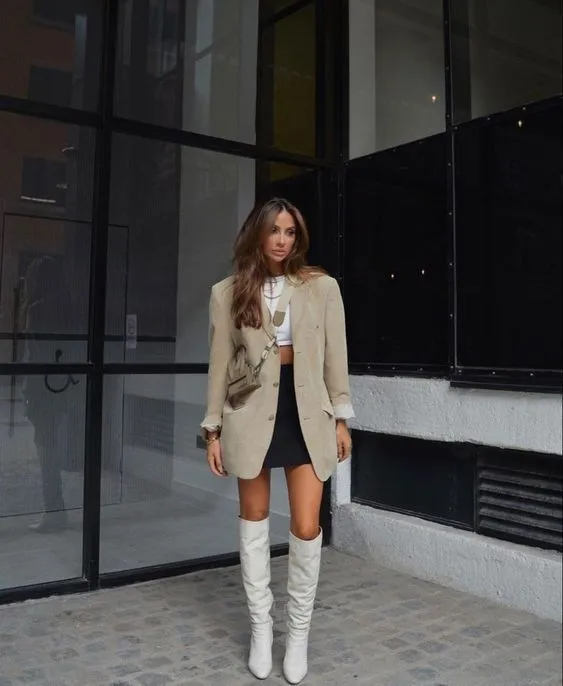
Photo: friends deciding outfits in front of closet mirror, via i.pinimg.com
It arrives at 4:12 p.m. on a Thursday, in a group chat with eleven people and one person who always types in all caps.
Hey! Keep it casual tonight.
Four syllables. Zero information. Twelve adults immediately begin a silent, private panic that will consume the next two and a half hours of their lives.
The Text Chain Begins
The replies come in fast, and none of them contain a question.
Perfect, casual it is. Same, I'm just doing jeans. Love that.
Nobody asks what casual means, because asking that is a confession. It signals that you have not yet cracked the code, that you are an outsider in a social group you have known for nine years. So the word goes unchallenged, and eleven people start aggressively guessing.
The word casual has probably ruined more evenings in America than rain has. Rain is honest. Rain tells you what it is. Casual is a fog machine.
Dialect One: Sneakers-and-Jeans Casual
This is the purest form, and it is rarer than advertised.
Markers: sneakers, jeans, a shirt that is neither ironed nor wrinkled, hair at whatever stage it was already in. It means a friend's apartment, a bar with no host stand, food eaten while standing, and a night that ends before 11.
How to spot it: the organizer has not made a reservation. If there is no reservation, casual is real.
How to ruin it: wearing anything with a visible hem you had to think about.
Dialect Two: Going-Out Casual
This is casual in the way that a salad with three kinds of cheese is a salad.
Markers: jeans, but dark. Sneakers, but clean. A top with a structural opinion. Hair that has been done — not elaborate, but done, in a way that took 25 minutes and would never be described aloud as effort.
Going-out casual is the most popular dialect in the country and the least accurately named. It requires a full outfit, a backup outfit, and a jacket that gets carried all night and never worn.
How to spot it: somebody in the thread says but like, cute casual.
Dialect Three: Casual With a Host Stand
Here is the trap.
Markers: the organizer mentions a neighborhood rather than a location. Somebody says you'll be fine in whatever. Somebody else says I've heard it's a scene now.
This means casual in the way people mean it when they have secretly booked a place with a host stand, a reservation name, and lighting designed to make everyone look like a suspect in a prestige drama.
In this dialect, casual is doing a huge amount of unpaid labor. It is softening a plan that requires real clothing so that nobody feels ambushed. The person who takes the word literally will arrive in a hoodie and spend the evening being seated near the kitchen, which is where they put the people who did not read the room.
Tactical note: if the word scene appears, upgrade one full tier and bring nothing you cannot carry.
Dialect Four: Outdoors Casual, Said by an Indoor Person
Sometimes the plan involves walking, weather, a fire pit, or an address that does not appear on a map. This casual is real, but it is physical, and it will defeat you.
Markers: the organizer uses the phrase dress in layers and then does not elaborate. Nobody has checked the temperature.
The person who wears the good shoes to this event will be carrying them by 10 p.m.
Tactical Advice for the Chronically Overdressed
You know who you are. You have a reputation, and it has preceded you into more rooms than you would like.
First: stop apologizing. The apology is worse than the outfit. Saying I know, I'm overdressed five times makes everyone else feel underdressed, which is exactly the thing you were trying to avoid.
Second: build a downgrade lever into every outfit. A blazer you can remove. A heel you can lose in a bag. A layer that converts the whole thing from dinner to drinks without anyone clocking the transition.
Third: read the reservation. This is the single most useful skill in the entire discipline. If the place takes reservations, the plan is not casual. Nobody wants to hear it, but it is free information and it is sitting right there in your phone.
Fourth: you are allowed to be the dressed one. You are not allowed to be weird about it. Wear the thing, say nothing, order something, have a night.
Tactical Advice for the Person Who Underdresses Out of Principle
We see you. The thing where you refuse to try — the whole if they don't like me in this, that's their problem speech — is not a personality, it is a strategy. It is preemptive armor. You are not relaxed, you are defended.
Nobody is asking you to wear a suit to a backyard. They are asking you to consider that the group chat keeps saying casual because they want you to show up, and that a clean shirt is not a betrayal of your values.
The Only Rule That Survives Translation
Here is the thing nobody says: casual is not a level of formality, it is a level of effort you are allowed to be seen making. The outfit can be anything. The invisible part — the willingness to look like you tried — is the whole code.
So when the text arrives, do not ask what casual means. Ask who is organizing, where they are standing when they text it, and whether they have ever in their life worn a visor unironically. That will tell you more than the word ever will.
Then text back perfect, same and go figure it out, because that is the American way.