Method Acting in Retail: The Academy Award Performance You Give Every Dressing Room Mirror
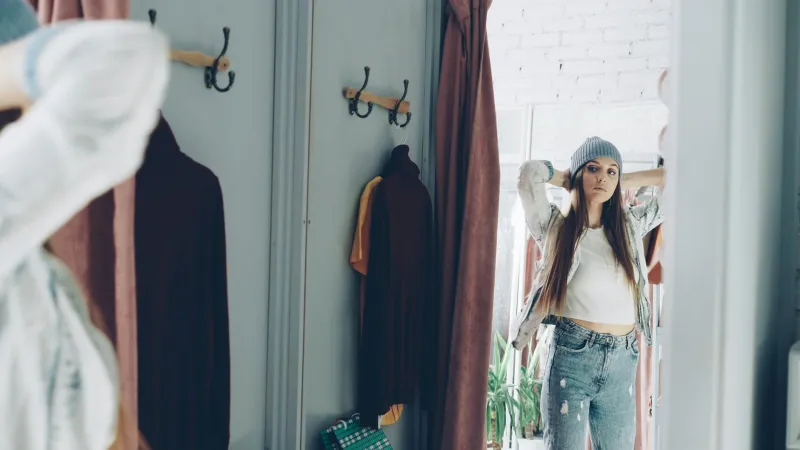
Walk past any department store dressing room and you'll hear the sounds of America's most underrated theatrical performances. The confident heel click. The strategic hair flip. The whispered "Yeah, I could totally wear this to..." followed by a pause while the performer invents a scenario worthy of their new potential outfit.
Welcome to the dressing room audition, where every American becomes a method actor trying on not just clothes, but entire alternate versions of themselves.
The Posture Transformation: Instant Confidence, Just Add Clothing
There's something magical that happens the moment you put on an outfit that costs more than your monthly coffee budget. Suddenly, your shoulders drop back, your chin lifts, and you're standing like someone who definitely has their life together and probably owns matching dinnerware.
This isn't conscious. One minute you're slouching in your everyday anxiety posture, and the next you're channeling the energy of someone who responds to emails promptly and has never eaten cereal for dinner.
The dressing room mirror becomes a portal to your most confident self — the version of you who would wear this blazer to important meetings you don't actually have, or rock these heels to events you're not currently invited to.
The Imaginary Audience: Population You
Here's where the performance gets really interesting. You start playing out scenarios for an audience that exists entirely in your head. "This would be perfect for that work presentation," you think, despite the fact that your current job involves zero presentations and maximum sweatpants.
The imaginary audience is always impressed. They're nodding approvingly at your fashion choices, whispering about how put-together you look, maybe even asking where you got that amazing jacket.
In reality, most people are too busy performing their own dressing room monologues to notice what anyone else is wearing, but the imaginary audience doesn't care about reality. They're here for the show.
The Half-Turn Maneuver: Choreographed Spontaneity
Every dressing room veteran knows the half-turn. It's that casual glance over your shoulder that's designed to look effortless but is actually the result of years of mirror choreography. The goal is to catch yourself looking naturally confident from an angle you don't usually see.
The half-turn has to look accidental, like you just happened to turn at the exact moment you looked most photogenic. Too much turn and you look like you're trying too hard. Too little and you miss the angle that makes you feel like you could be in a catalog.
Advanced practitioners have developed a whole repertoire: the thoughtful lean, the casual hand-on-hip, the "just walking by" stride that somehow happens to showcase the outfit's movement.
The Personality Try-On: Who Am I in This Outfit?
This is where dressing rooms become existential. You're not just trying on clothes; you're trying on entire personality archetypes. The leather jacket transforms you into someone who probably rides motorcycles and definitely doesn't overthink text messages. The flowy dress makes you into someone who goes to farmers markets and has strong opinions about sustainable living.
Each outfit comes with its own backstory. The blazer belongs to someone who has business cards and uses them confidently. The vintage band tee is worn by someone who was definitely at that concert, or at least knows someone who was.
You find yourself adjusting not just your posture but your entire energy to match the outfit's vibe. It's method acting for retail therapy.
The Future Self Negotiation: Investment in Who You Could Become
The most dangerous part of the dressing room performance is when you start making deals with your future self. "I'll start going to more events if I buy this dress," you bargain with the mirror. "This blazer will motivate me to network more professionally."
You're essentially buying a costume for a character you plan to become. The outfit becomes a commitment to a lifestyle you don't currently live but definitely could if you just had the right clothes for it.
This is how closets end up full of aspirational clothing — outfits for the person you thought you'd be by now, or the person you still might become if the stars align and you suddenly develop the social calendar to match your wardrobe.
The Return Rehearsal: Exit Strategy Planning
Even in the middle of your confidence performance, part of your brain is calculating return policies. You're falling in love with the outfit while simultaneously planning its potential breakup.
"I could return it if I don't wear it in the first month," becomes part of the internal monologue. The tags stay on just a little longer than necessary. The receipt gets filed in a special place.
It's like dating someone while keeping your dating app active, just in case.
The Dressing Room Confidence Crash
The cruelest part of the dressing room performance is that the confidence often doesn't survive the transition to real life. The blazer that made you feel like CEO material in the store somehow makes you feel like you're playing dress-up when you wear it to actual work.
The dressing room has special lighting, special mirrors, and most importantly, special circumstances. You're performing for yourself, which is the most forgiving audience you'll ever have.
Once you're back in the real world, the outfit has to perform without the benefit of your dressing room choreography and imaginary audience.
The Truth About Retail Theater
Maybe the dressing room performance isn't about the clothes at all. Maybe it's about the permission to try on different versions of yourself, to spend a few minutes being the person you think you could be with the right costume.
The clothes are just props in a larger performance about possibility and potential. The real purchase isn't the outfit — it's the feeling of being someone who would wear that outfit with complete confidence.
And honestly? That's not such a bad investment, even if the blazer ends up hanging in your closet with the tags still on.