The Invisible Repeat: A Covert Field Guide to Rewearing Outfits Without Losing Your Internet Credibility
Let's start with the truth nobody in a fashion caption will admit: you have worn that exact outfit before. Possibly twice. Maybe on back-to-back weekends. The jeans are the same. The top is the same. The lighting is suspiciously similar. And yet, you posted it again — because the coffee looked good, the light was perfect, and honestly, the outfit still works.
This is not a confession. This is a skill.
Rewearing clothes is, objectively, the most financially responsible and environmentally sensible thing you can do with a wardrobe. The fashion industry knows this, sustainability advocates have been screaming it for years, and yet the unspoken social media contract still whispers that a repeated outfit is somehow a character flaw. It is not. But navigating the optics? That takes a little finesse.
Welcome to the OutfitWatch Field Guide to the Invisible Repeat.
The Core Principle: Change One Thing, Change Everything
Here's the foundational law of strategic outfit rotation: the human eye is lazy and the Instagram algorithm has no memory. What looks like a completely different look to your followers is often just the same base outfit with one meaningful element swapped out.
This is not deception. This is editing.
A white button-down tucked into wide-leg trousers is one outfit. Add a chunky belt and a blazer and it becomes another. Swap the blazer for a cropped cardigan and suddenly you're in a third look entirely. The trousers haven't moved. The shirt hasn't changed. You have simply applied accessories like punctuation — and punctuation changes everything.
The items that carry the most transformative weight: shoes, bags, outerwear, and jewelry. Master these four categories and you can run the same core wardrobe on a monthly loop without a single person noticing.
The Photography Angle Playbook
Let's talk about the visual mechanics of disguise, because angle and framing do a genuinely surprising amount of heavy lifting.
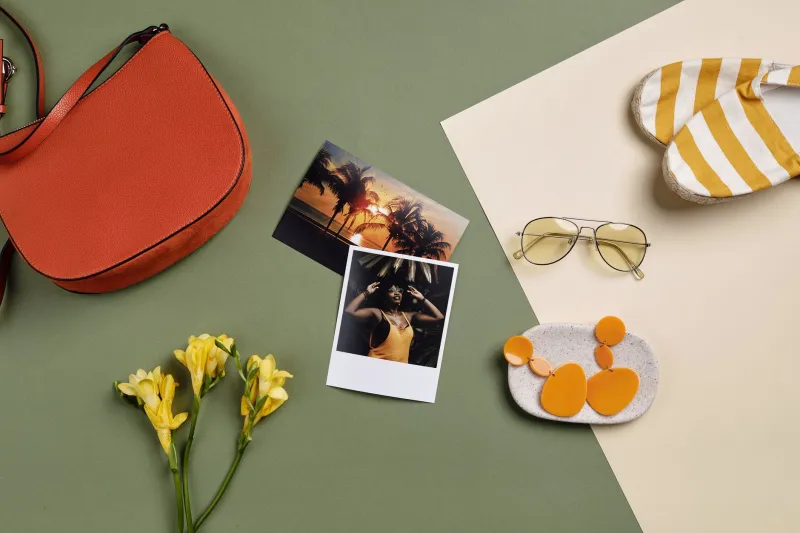
If your last post featured a full-length mirror shot, your next outing in the same outfit should be a close crop — think waist up, focus on the accessories, maybe a flat lay of the bag you're carrying. The outfit becomes background context rather than the main event.
Conversely, if you previously posted a detail shot of a print or a texture, go wide next time. Show the whole silhouette. Different crop, different story.
Background matters enormously here. The same olive green jacket photographed against a brick wall reads completely differently than the same jacket photographed against a white wall or in natural light outdoors. Your followers aren't cataloging your wardrobe — they're consuming a visual mood. Change the mood, and the outfit essentially resets.
The Timing Window: How Long Is Long Enough?
Conventional wisdom says wait thirty days between outfit repeats. That's a reasonable baseline, but the real answer is more nuanced and depends heavily on your posting frequency and your audience's engagement patterns.
If you post daily, your followers are essentially experiencing content fatigue by day ten. Something you wore on day four is ancient history by the end of the month. If you post twice a week, the window stretches longer — your audience has fewer posts to scroll through, which means better recall.
The safest repeat window for moderate posters: three to four weeks, minimum. For high-frequency posters: two weeks is probably fine, especially with the accessory swap strategy in place. And if you're posting Stories versus feed content, the calculus shifts again — Stories vanish in twenty-four hours, which means they're essentially a consequence-free zone for repeat appearances.
The Cross-Platform Shuffle
Here is an advanced move that doesn't get nearly enough credit: platform diversification. Your Instagram audience and your TikTok audience overlap less than you think, and your Pinterest boards are operating in a completely separate time dimension from both.
An outfit that appeared in a TikTok transition video two months ago can absolutely make its debut as a static Instagram post today. Different platform, different context, different perceived novelty. You're not recycling — you're cross-posting with intention.
The only platform that complicates this strategy is BeReal, which by its nature is designed to catch you being exactly who you are, in whatever you're actually wearing. But honestly, BeReal's moment may have already passed, so let's not lose sleep over it.
When Someone Actually Notices
It happens. Someone who follows you on three platforms and has the memory of an archivist will slide into your comments with the digital equivalent of "wait, didn't you wear this last month?"
First: breathe. This is not a crisis.
The correct response is cheerful, unapologetic confidence. "Obsessed with this outfit, I keep coming back to it" is a complete sentence. So is "Cost per wear, baby." So is literally just a heart emoji, which communicates warmth while revealing absolutely nothing.
What you should not do is over-explain, apologize, or delete the post. Outfit repeating with confidence is a power move. Outfit repeating with shame is a whole different energy and people can tell the difference.
The Bigger Picture (No, Really)
Beyond the social media optics, there's a genuinely good argument for building a wardrobe specifically designed to be reworn — pieces that work in multiple combinations, that photograph well in different contexts, and that you actually like enough to reach for again.
The influencer content cycle has spent years selling the idea that a constantly refreshed wardrobe is the goal. It isn't. A wardrobe you actually use is the goal. The clothes hanging in the back of your closet with the tags still on them aren't aspirational — they're just expensive regrets.
Repeat your outfits. Rotate them strategically. Swap the shoes. Change the bag. Post with the confidence of someone who has absolutely nothing to prove.
The internet's attention span is shorter than your favorite pair of jeans. Use that to your advantage.