The Sacred Art of Closet Diplomacy: What Happens When Your Friend's Sweater Becomes Your Problem
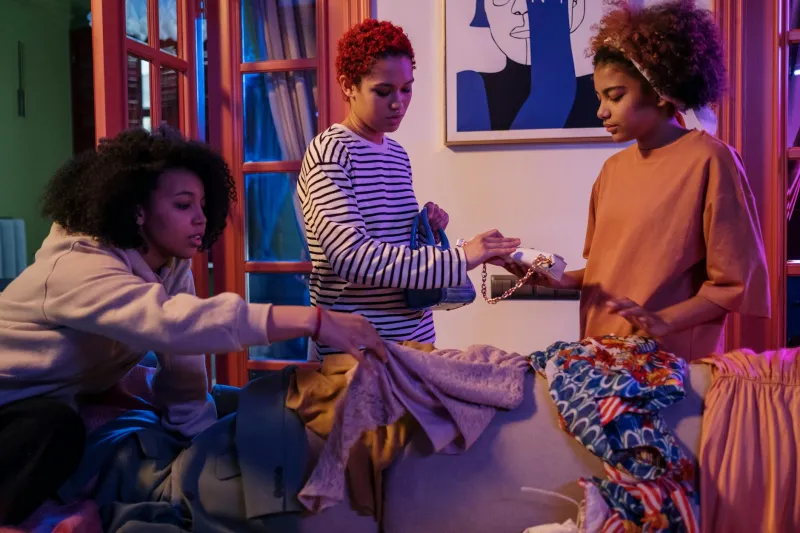
The Initial Transaction: A Study in Optimism
It starts so innocently. You're getting ready for date night, and your friend casually offers their "cute black top" because yours apparently "doesn't do justice to your figure." What follows is a verbal contract more binding than most rental agreements, yet somehow less specific than a horoscope.
"Just bring it back whenever," they say, which roughly translates to "I expect this back in pristine condition within 72 hours, but I'm going to act chill about it until I'm not."
The borrowing of clothes between friends operates on a delicate ecosystem of unspoken rules that would make international diplomats weep. It's a social contract written in invisible ink, enforced by passive-aggressive Instagram stories and the occasional pointed text about "missing" items.
The Invisible Countdown Clock
Despite what your friend said about "whenever," there's a ticking clock that starts the moment you walk out their door. The acceptable return window exists in a mysterious timeline that somehow everyone knows but nobody discusses:
- Days 1-3: You're golden, maybe even responsible
- Days 4-7: Starting to push it, but still acceptable
- Week 2: Your friend is definitely thinking about it
- Week 3: You're officially "that friend"
- Month 1+: Congratulations, you've accidentally stolen something
The truly diabolical part? This timeline accelerates dramatically if they see you wearing something else to a similar event. Post a photo in a different cute top while theirs sits in your hamper? You've just committed a friendship felony.
The Anxiety Olympics of Perfect Condition
Returning borrowed clothes requires the precision of a museum curator and the anxiety of a bomb defuser. Every microscopic change becomes a potential diplomatic incident. Did this wrinkle exist before? Was there always this tiny thread? Has this fabric always felt this... different?
You find yourself examining the garment with forensic intensity, searching for evidence of your temporary ownership. A faint deodorant mark becomes grounds for a full-scale panic attack. You consider professional cleaning for a top that probably cost $30 at Target.
The paranoia is real: you start treating their clothes better than your own. Your borrowed dress gets the premium hanger while your actual wardrobe lives in a wrinkled pile on that chair. Because returning something in worse condition than you received it isn't just rude—it's a violation of the sacred trust that holds our social fabric together.
The Instagram Incident Report
Then comes the photo evidence. You look incredible in their top (obviously—it was chosen specifically for this moment), and the Instagram post is fire. But here's where things get complicated: do you tag them? Not tagging feels like theft. Tagging feels like showing off. The middle ground—a casual "thanks for the top babe! @friendsname"—somehow feels both grateful and flexing simultaneously.
Meanwhile, your friend is conducting their own social media investigation. They're definitely checking to see if you credited them, if you looked better in it than they do, and whether this post has more likes than their last outfit post. It's not petty; it's human nature with a smartphone.
The Return Ceremony
The actual return process is an art form in manufactured casualness. You can't seem too eager (suspicious) or too casual (disrespectful). The ideal return happens organically—during a planned hangout where you can casually mention, "Oh, I brought your top back!" as if you just remembered, even though you've been planning this moment for days.
The handoff requires specific choreography. You present the item freshly washed, properly folded, maybe even on a hanger if you're feeling fancy. Your friend examines it with the casual glance of someone definitely not checking for damage while saying, "Thanks babe, you didn't have to wash it!" (You absolutely had to wash it.)
The Unspoken Hierarchy
Not all borrowed clothes are created equal. There's a clear hierarchy that determines the stress level of each transaction:
Low Stakes: Basic tops, casual dresses, anything from Target Medium Stakes: Designer pieces, sentimental items, anything that cost more than $100 High Stakes: The "special occasion" dress, anything vintage, the piece they're "saving for something special" Relationship Ending: Their dead grandmother's jewelry (why did you even ask?)
The Repeat Offender Protocol
Successfully return one item? Congratulations, you're now eligible for the advanced program. But beware the slippery slope of serial borrowing. What starts as occasional wardrobe assistance can quickly evolve into you treating their closet as your personal rental service.
The truly skilled practitioners maintain a mental inventory of borrowed items across multiple friends, creating a complex web of fashion debt that requires spreadsheet-level organization. You start categorizing friends by their lending policies and return expectations.
The Nuclear Option: The Forgotten Item
Sometimes, despite your best intentions, an item disappears into the black hole of your closet. Months pass. Seasons change. You discover their dress hanging in the back of your closet like evidence of a crime you've forgotten you committed.
This is when you face the ultimate test of friendship: the awkward confession. "Hey, so I found your dress and I'm pretty sure I've had it since last summer..." It's humbling, embarrassing, and somehow always happens right when you need to borrow something else.
The Unspoken Truth
Here's what nobody wants to admit: we're all winging it. Every borrowed clothing transaction is an experiment in trust, communication, and social anxiety management. We're all just hoping our friends are as understanding about fashion loans as we pretend to be.
The system works not because the rules are clear, but because we're all equally invested in maintaining the delicate balance. Because at the end of the day, sharing clothes with friends isn't really about the clothes—it's about the trust, the intimacy, and the shared understanding that sometimes your wardrobe needs backup.
Just remember to set a phone reminder to return it. Your friendship might depend on it.