You Already Own That: The Annual Ritual of Buying Summer Clothes You Definitely Have in a Box Somewhere
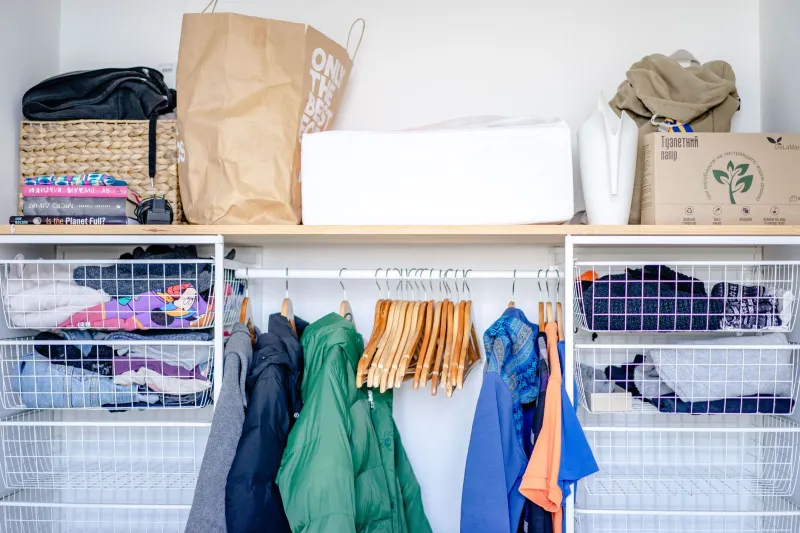
It happens with the precision of a natural phenomenon. The temperature climbs above sixty degrees for the first time in months, the sun makes a credible appearance, and something in the American brain just... resets. Suddenly you are standing in the middle of a Target seasonal section holding a pair of linen shorts like you've never seen linen shorts before. Like you didn't pack away an almost identical pair last October.
Welcome to the Seasonal Purge Paradox — the annual financial event that the fashion industry quietly relies on and your storage unit could have prevented.
The Anatomy of Seasonal Amnesia
Let's be clear about what's actually happening here, because it's not stupidity. It's psychology, and fairly predictable psychology at that.
When you pack away your summer clothes in the fall, you are essentially performing a low-grade version of out-of-sight, out-of-mind storage. The items cease to exist in your daily visual field. Over the course of five or six months, the memory of what you own fades — not completely, but enough that when spring rolls around and you're standing in a store looking at a breezy white linen button-down, your brain registers it as new possibility rather than item you already own in off-white from two years ago.
This is compounded by the fact that trends shift just enough each season to make last year's stuff feel vaguely wrong. Shorts are a half inch longer. Necklines have shifted. The exact shade of sage green that was everywhere last summer is now somehow different from the sage green that's everywhere this summer, even though you could hold them side by side and not tell the difference.
The fashion industry knows this cycle intimately. The timing of seasonal drops is not accidental.
Take the Quiz: What Kind of Seasonal Repurchaser Are You?
Before we get to solutions, a moment of honest self-assessment. Answer these questions and tally your results.
1. When did you last fully unpack your seasonal storage? a) I unpacked it, assessed it, and organized it by category — (1 point) b) I opened the bin, took out a few things, and shoved the rest back — (2 points) c) I'm not entirely sure where the bin is — (3 points)
2. How do you typically shop for seasonal pieces? a) With a list based on actual gaps in my wardrobe — (1 point) b) I browse and buy what feels right in the moment — (2 points) c) I open an app at 11pm and wake up to three shipping confirmations — (3 points)
3. Have you ever purchased something, gotten home, and discovered you already owned it? a) No, I'm very organized — (1 point) b) Once or twice, it happens — (2 points) c) I have two of the same white tank top and I'm not sure which one I bought first — (3 points)
4. What happens to last season's clothes when you store them? a) They go in labeled, organized bins with a contents list — (1 point) b) They go in a bag or bin with vague intentions — (2 points) c) Some of them go in a bin and some of them just kind of disappear — (3 points)
Results:
- 4–6 points: Honestly impressive. You may be the most organized person reading this article.
- 7–9 points: You're in the normal range of seasonal chaos. Manageable with minor adjustments.
- 10–12 points: You are the target demographic for every spring collection drop and the fashion industry sends you a silent thank-you every March.
The Real Cost of Forgetting
Let's put some numbers on this, because the math is quietly alarming.
If you spend an average of $150 on summer basics each spring — a couple of tanks, a pair of shorts, a sundress — and you're repurchasing items you already own at roughly a fifty percent rate, that's $75 a year going toward clothes you technically have. Over a decade, that's $750 in duplicate linen. That's a flight somewhere warm. That's a genuinely good coat. That's a lot of money to spend on things currently living in a plastic bin.
And that's a conservative estimate. For anyone with a more aggressive shopping habit, the numbers scale accordingly.
The Fix Is Boring but It Actually Works
Here's the part where we give you the advice you already know but haven't done yet.
The Seasonal Inventory. Before you buy a single new summer item, physically unpack everything from storage and lay it out. Not just open the bin and peer in — actually take it all out. Try on anything you're unsure about. Create three piles: keep and wear, donate, and genuinely needs replacing. The third pile is your actual shopping list.
The Phone Photo Catalog. This sounds tedious and it is, mildly, but doing it once saves you significant money going forward. Photograph each item — front, back, and a detail shot if relevant — and store them in a phone album labeled by season. When you're standing in a store wondering if you already own something similar, you can check in thirty seconds.
The One-In-One-Out Rule. Before buying a new summer piece, identify what it's replacing. Not in a vague "I'll get rid of something eventually" way — actually name the item. If you can't name what it's replacing, you probably don't need it.
The 48-Hour Hold. Add it to your cart and close the app. If you're still thinking about it two days later, it might actually be a gap in your wardrobe. If you've forgotten it entirely, that tells you something useful.
The Seasonal Purge Is Also a Lie
One more thing worth naming: the ritual of the seasonal purge — the big dramatic closet cleanout — often creates the problem it's supposed to solve. Purging without cataloging means you lose track of what you actually own. You donate things impulsively that you'll repurchase next season. You create artificial scarcity in your own wardrobe and then fill it again at full retail price.
The goal isn't a perfectly empty closet twice a year. It's a closet you actually know.
Your summer clothes are in a bin somewhere. They're waiting. They're probably fine. Check before you buy.