The Goodwill Gospel: How Thrifting Stopped Being Shopping and Became a Whole Belief System
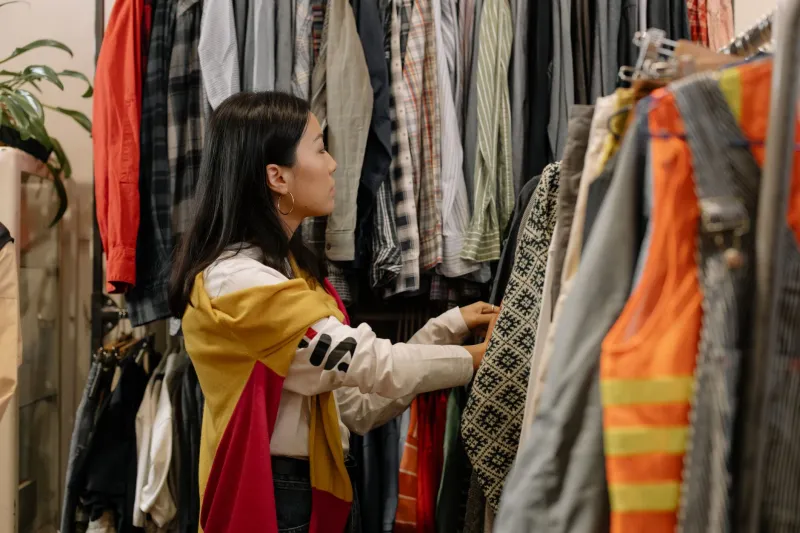
There was a time — not so long ago — when going to Goodwill was just a thing you did. You went, you flipped through racks, you found a weird jacket or a great pair of jeans, you paid $6, you left. It was practical. It was a little dusty. It did not require a content strategy.
That time is over. Thrifting has evolved. It has levels now. It has a community, a vocabulary, a hierarchy, and an entire value system attached to it. It has people who have been doing it for years and people who started doing it last spring and a very tense relationship between those two groups. It has, somehow, become a personality.
How We Got Here
The thrifting-as-identity pipeline has a clear origin story, even if people who are deep in it would prefer not to think about it. Environmental awareness around fast fashion grew significantly through the late 2010s. Simultaneously, vintage and Y2K aesthetics started trending hard on social media. TikTok arrived and made thrift haul videos a legitimate content category. Suddenly, the same generation that was doing Shein hauls in 2020 was announcing their commitment to sustainable fashion and the thrill of the secondhand find.
This is not a criticism of the shift — genuinely, good. More people thinking about where their clothes come from is a positive development. The issue is the speed and totality of the conversion. One minute fast fashion was everywhere. The next, everyone had apparently always been a devoted thrifter who simply hadn't mentioned it until now.
The Shein hauls didn't disappear, by the way. They just got quieter.
The Personality Tier List
If you spend any time in thrift culture — online or in actual stores — you'll notice there's a very specific social structure at play.
At the top: the lifers. People who have been thrifting since before it was cool, who have strong feelings about estate sales versus Goodwill versus Depop versus local vintage shops, and who experience something between amusement and genuine irritation at the current moment. They are not wrong to feel this way, even if they occasionally express it by being a little insufferable about it.
In the middle: the enthusiasts. People who genuinely love thrifting now, have integrated it into their lifestyle, and approach it with real effort and creativity. These are good people. Thrift culture is better for having them.
And then: the performative adopters. People who mention thrifting constantly, post their finds obsessively, use it as a moral differentiator in conversations about fashion, and may or may not have been in a Zara two weeks ago but we'll never know because that part didn't make the Instagram Stories.
The third group is the most interesting to observe, because their relationship with thrifting is less about the clothes and more about what the clothes communicate. The find isn't just a find — it's evidence of a particular kind of person. Resourceful. Sustainable. Anti-establishment. Cool in a way that can't be bought, except that it technically was bought, just at a lower price point.
The Price Problem
Speaking of price points — we need to talk about what has happened to them, because it is remarkable.
Goodwill, Salvation Army, and their peers have noticed that their inventory is suddenly desirable in a new way. Prices have adjusted accordingly. The $3 flannel is increasingly rare. Vintage denim that would've sat on a rack for weeks now gets pulled and resold on Depop for $65 before most shoppers see it. Specialized vintage shops in trendy urban neighborhoods are charging prices that would make a boutique blush — for clothes that were, at some point, donated.
There's also the rise of the reseller, a figure who occupies complicated moral territory in thrift discourse. Resellers buy inventory in bulk from thrift stores and resell it at significant markup online. The thrift community has complicated feelings about this. The resellers have feelings too, mostly about their profit margins.
The net result is that thrifting is no longer reliably cheap. It is still often cheaper than buying new, but the gap has narrowed considerably, and the "I got this for practically nothing" story that is so central to thrift culture's appeal is becoming harder to tell honestly.
The Gatekeeping Olympics
Every subculture eventually develops gatekeeping, and thrift culture is no exception. The gatekeeping here is particularly layered because it operates on multiple axes simultaneously.
There's the authenticity axis: have you been doing this long enough to have credibility? There's the ethics axis: are you thrifting sustainably or are you a reseller draining inventory? There's the class axis — genuinely important and often underacknowledged — which involves the tension between people who thrift by choice and people who thrift by necessity, and whether the trendification of thrifting has made it harder and more expensive for the latter group.
That last point deserves more than a comedic aside. When thrifting becomes aspirational and prices rise to match demand, the people who relied on these stores for affordable clothing bear the real cost. It's one of the genuine complications underneath all the aesthetic content, and it's worth sitting with.
So What Are We Actually Doing Here?
Thrifting is, at its core, a good thing. Buying secondhand extends the life of clothing, reduces waste, and keeps money out of fast fashion supply chains. None of that changes based on whether someone is doing it for the right reasons or for the content.
But the culture that has grown up around it — the identity performance, the gatekeeping, the prices that have crept toward the very retail costs it was supposed to circumvent — those are worth examining with clear eyes.
You can love thrifting without making it your entire brand. You can find great vintage pieces without narrating the moral superiority of every purchase. You can also shop at Target sometimes without issuing a press release about it.
The clothes don't actually care where they came from. They just want to be worn by someone who likes them. That part, at least, hasn't changed.