Strangers on the Internet Have Rated Your Outfit and the Results Are In
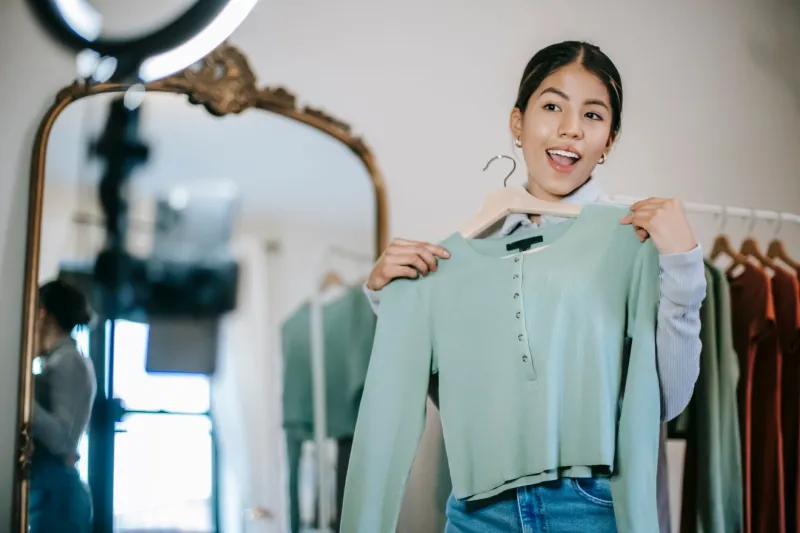
At some point in recent history — somewhere between the pandemic and whatever is happening now — getting dressed stopped being a private activity and became a performance with an audience. Not a runway. Not a photo shoot. Just a 15-second video of someone spinning around in their apartment while a trending audio clip plays underneath, silently asking the internet: well? What do you think?
This is the TikTok fit check. It is extremely normal behavior and we are all participating in it willingly.
The Ritual, Explained
If you somehow haven't encountered this format, here's how it works: a person films themselves in an outfit, usually with a full-length mirror involved, sometimes with a little walk, occasionally with a slow pan from shoes to face. The caption says something like "fit check ✓" or "rate the fit" or sometimes just nothing at all, because the outfit is supposed to speak for itself.
The comments then fill with strangers offering numerical ratings ("9/10"), enthusiastic affirmations ("OKAY YOU ATE"), gentle suggestions ("different shoes maybe?"), and occasionally the kind of unsolicited critique that would get someone escorted from a dinner party.
The person who posted the video reads all of these comments. They feel things about them. Their opinion of their own outfit may genuinely shift based on what strangers from Ohio or Georgia or wherever have to say about their jeans.
And here's the wild part: this isn't considered strange anymore. This is just how getting dressed works now.
The Psychology of Asking Randos for Fashion Advice
Let's think about what's actually happening here. You have assembled an outfit. You looked in the mirror. You made a decision. And then — instead of walking out the door — you filmed yourself, edited the clip, added audio, posted it publicly, and waited for external confirmation before fully committing to the look.
Psychologists would have a field day, and honestly, they should. The fit check taps into some very human needs: the desire for social validation, the anxiety of self-presentation, and the very modern problem of having an audience available at all times whether you want one or not.
There's also something uniquely contemporary about the specific intimacy of it. These aren't your friends telling you the outfit works. These are strangers — people who don't know you, don't know where you're going, don't know anything about your life — rendering judgment on how you've chosen to present yourself. And somehow that carries weight. Sometimes more weight than what your actual friends say.
Why? Possibly because strangers feel more objective. Your best friend will tell you the outfit is great because they love you. The comment section has no such loyalty. When 847 people say the fit is clean, it feels earned in a way that a supportive text from your roommate just... doesn't.
The Pressure Cooker
Here's where the fit check stops being purely fun and starts being a little exhausting. Once you've trained yourself to seek external validation for your outfits, it becomes hard to stop. The internal voice that used to say "this looks good" now says "but what would the comments say?"
You start dressing for the potential video rather than for the actual occasion. The outfit that would've been perfect for a Tuesday errand run gets quietly shelved because it won't translate well on camera. You reach for something more "content-ready" — better colors, cleaner lines, something that reads well in a vertical format with a trending audio underneath.
This is a genuinely strange development in human fashion history. We've always dressed for other people to some degree — that's just social behavior. But dressing for an imagined online audience, one that may or may not ever see the video, is a new layer of performance that nobody really signed up for consciously.
The Comment Section Is Not Your Stylist
To be clear: fit check culture has produced some genuinely good outcomes. It's created community around fashion in a way that feels accessible and democratic. It's launched trends from actual people's closets rather than just runways. It's made style conversations more inclusive and more fun.
But the comment section is also not a reliable source of fashion advice. It is a fast-moving, anonymous, emotionally unpredictable place where the same outfit can receive "this is everything" and "this isn't the vibe" within three minutes of each other. Crowd-sourcing your self-image from that environment is, at minimum, a chaotic strategy.
There's also a creeping homogenization happening. When everyone is dressing for approval from the same massive online audience, the outfits start to converge. The same silhouettes, the same color palettes, the same "clean girl" or "coastal grandmother" or whatever-the-current-aesthetic-is energy, because those are the fits that tend to do well. The comment section, it turns out, has preferences — and they're not always as diverse as the platform's user base.
The Verdict
The fit check is here, it's not going anywhere, and honestly it's mostly harmless fun. Wanting to know if your outfit looks good is one of the oldest human impulses in the book. The internet just gave it a new format and a comment section.
But maybe — just occasionally — trust yourself. You got dressed. You looked in the mirror. You made a choice. That was enough before TikTok existed, and somewhere underneath all the algorithmic validation-seeking, it still is.
The outfit was fine. It was probably great, actually. You didn't need 400 strangers to tell you that.
Although, okay, it is kind of nice when they do.