You Own Eight White Sneakers and Each One Is Completely Different (They Are Not Different)
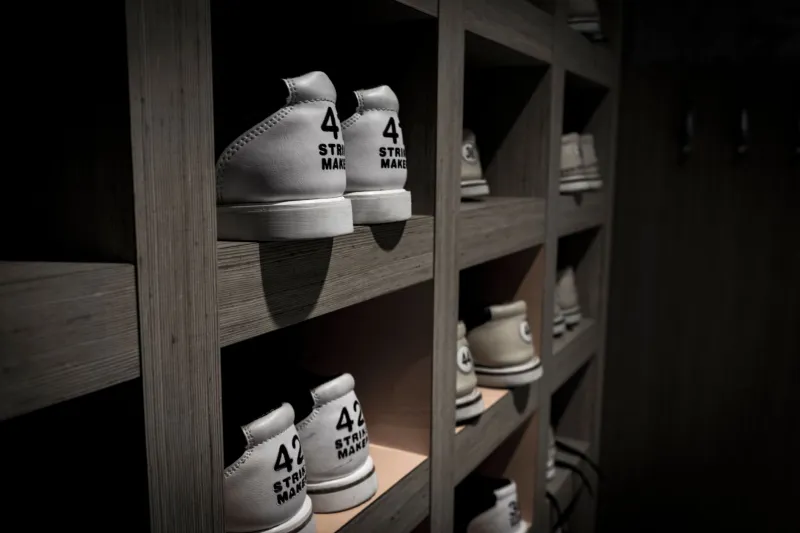
There is a person in your life — possibly you — who owns multiple pairs of what are, to any objective outside observer, the exact same sneaker. Same silhouette. Same general construction. Same intended purpose. The only meaningful difference is that one is bright white, one is off-white, one is cream, one is 'vintage white,' and one arrived in a colorway that the brand described as 'sail,' which is just white with a marketing degree.
This person will tell you, with complete sincerity, that each pair serves a distinct function. They are not the same shoe. They are a curated footwear ecosystem. Do not challenge this. You will not win.
How the Collection Begins: A Completely Predictable Origin Story
It always starts reasonably. You buy a white sneaker. It's a classic. Versatile. Goes with everything. This is true and correct — the white sneaker is genuinely one of the more defensible wardrobe investments a person can make, and nobody is here to argue otherwise.
But then the original pair gets dirty. Or worn in. Or you see a slightly different version that fixes what you didn't know you found lacking about the first one. Maybe the toe box is a little more rounded. Maybe the sole is marginally thicker. Maybe a brand you respect put out their version, and buying it feels like a statement about your values, which is a thing people genuinely believe about sneakers.
And suddenly there are two pairs. Two is fine. Two is normal. Two is not a collection.
Three is when the rationalizing begins.
The Taxonomy of Sneaker Justification
Every person who owns more than four pairs of essentially the same shoe has developed a personal justification framework. These are remarkably consistent across individuals, which is either comforting or alarming depending on your perspective.
The Functional Division. One pair is for 'going out.' One pair is for 'everyday.' One pair is for 'when I need them to look really clean.' One pair is 'kind of beat up so I wear them when it might rain.' This sounds logical until you realize you have assigned an entire pair of shoes to the weather forecast.
The Colorway Distinction. 'The chalk ones read warmer.' 'The bright white is more of a summer shoe.' 'The off-white ones work better with cream tones.' These statements are technically true in the same way that all statements about the precise undertones of white paint are technically true: real, but also slightly unhinged as a governing philosophy for footwear acquisition.
The Brand Loyalty Defense. You have the New Balance version, the Nike version, the Adidas version, and the Common Projects version — each chosen because they represent something different about who you are on different days of the week. What they represent, to everyone else, is the same shoe purchased at four different price points.
The Sunk Cost Retention. These ones hurt your feet slightly. You know this. You have known this since the second wear. But you paid $160 for them and so they remain in the rotation, visited occasionally, a reminder of a decision you cannot undo and refuse to fully acknowledge.
The Sneaker Culture Industrial Complex
It would be unfair to analyze sneaker hoarding without acknowledging the environment that produces it. Sneaker culture in America is a legitimate cultural phenomenon with its own economy, language, and moral code, and it has become extremely good at making you feel that not owning the new version of a shoe you already own is a form of personal failure.
Limited drops create urgency. Colorway releases create completionist instincts. Collaborations create the sense that this particular version — the one with the slightly different tongue detail and the special-edition box — is meaningfully distinct from the seventeen versions that preceded it. The industry has essentially gamified shoe ownership and handed you a controller.
The result is a generation of otherwise rational adults who will set a 7 AM alarm to purchase, at full retail price, a shoe they already own in a different color, because missing it would feel like losing something. The shoe is not different. The feeling is real. This is the magic and the madness of it.
Conversations With the Multiply-Sneakered
In the interest of journalism, OutfitWatch spoke with several people who own what we will diplomatically call 'an extensive collection of similar footwear.'
One 28-year-old graphic designer in Brooklyn, who asked to be identified only as someone who 'doesn't have a problem,' owns six pairs of white leather sneakers across three brands. 'They're all completely different,' he said, then paused. 'The silhouettes are different.' Another pause. 'Two of them are pretty similar.'
A 31-year-old marketing professional in Chicago owns four pairs of the same Nike model in different colorways, including two that she describes as 'basically the same but one is more of a warm white.' She wears one pair almost exclusively. The others are, in her words, 'contextual.' She could not immediately provide context for the context.
A 24-year-old in Los Angeles owns eight pairs of white sneakers, has worn three of them more than twice, and is currently considering a ninth pair because the brand just released a 'vintage' version that has a slightly yellowed sole, which is, she acknowledges, just a new shoe designed to look like an old shoe, which she finds 'really interesting from a design perspective.'
The Honest Case for Fewer, Better Pairs
Here is the thing nobody in sneaker culture wants to say out loud: you probably wear two pairs of your sneakers with any real regularity. Maybe three if you're disciplined about rotation. The rest exist in a state of occasional deployment, waiting for the specific outfit or occasion that justifies their existence in your collection.
This is not an argument against owning sneakers you love. It's an argument for being honest about why you're buying the next pair. If the answer is 'because I love this shoe and I will genuinely wear it,' great. If the answer is 'because the colorway dropped and I felt something,' maybe sit with that feeling for 48 hours before clicking purchase.
The white sneaker is a perfect object. It doesn't need to be owned eight times to be appreciated. One great pair, worn with genuine affection until it earns its retirement, is more satisfying than a shelf of identical shoes in slightly different shades of white.
But you're probably going to buy the sail colorway anyway. We get it. The sole profile really is different.