Dust, Denim, and Delusion: The Real Psychology Behind Your Thrift Store Habit
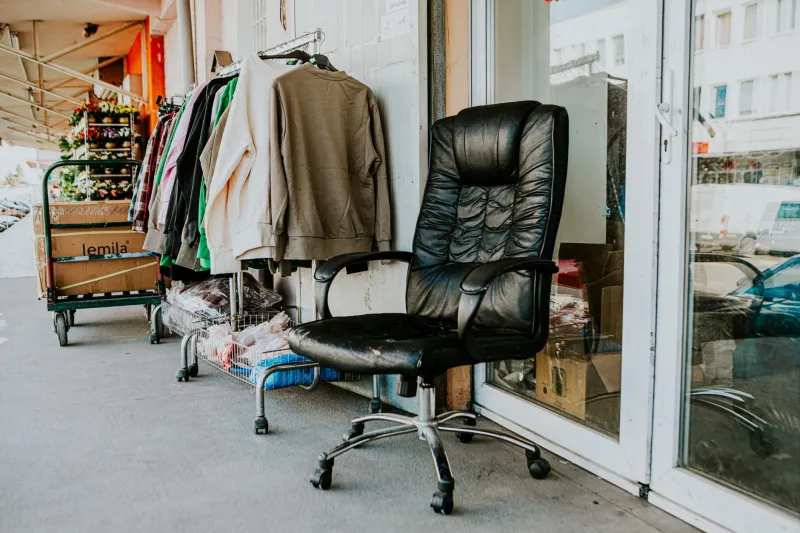
The thrift store is one of America's most democratic spaces. Rich, broke, fashion-forward, fashion-confused — everyone ends up in the racks eventually, flipping through slightly musty denim and wondering if that corduroy blazer is a find or a cry for help. It smells like a basement. The lighting is aggressively unflattering. The organizational system appears to have been designed by someone who thinks "color of tag" is a perfectly adequate substitute for "category of clothing."
And yet. You keep going back.
There is a reason for this, and it is not entirely about sustainability, despite what you tell people at parties. Let's excavate the real layers of the secondhand shopping experience — like the archaeologists of fashion we were always meant to be.
The Sustainability Alibi
First, the official story: you thrift because you care about the planet. Fast fashion is bad. Landfills are overflowing. Every dollar spent at a thrift store is a dollar not spent contributing to the cycle of overconsumption that's slowly drowning the fashion industry in unsold inventory.
This is true! It is also, for a significant portion of thrift shoppers, approximately 30% of the actual motivation. The other 70% is the thrill of the hunt, the price tag, the nostalgia, and the very specific dopamine hit of finding something cool before anyone else does.
None of that is shameful. But the sustainability framing does a lot of emotional heavy lifting that it doesn't always deserve. If you're buying ten items at the thrift store every month because they're cheap and fun, you are not dramatically reducing your fashion footprint — you are just shopping in a different building. The planet appreciates the thought. The math is complicated.
The 2000s Nostalgia Industrial Complex
If you want to understand what people are actually looking for in thrift stores right now, follow the fingers. They are flipping past the 1990s blazers and the 1980s power suits and they are stopping — really stopping, with a slight intake of breath — when they hit something that looks like it was worn to a middle school dance in 2003.
Low-rise jeans. Baby tees with faded graphics. Velour track sets. Anything that looks like it survived the Lizzie McGuire era with its dignity mostly intact.
This is not ironic appreciation. This is genuine, unironic nostalgia dressed up as vintage connoisseurship. The thrift store has become a time machine with a $6 price tag, and the destination is whatever year you were between 11 and 16 and forming your entire personality around what you were wearing.
There is nothing wrong with this. Wear the velour. You've earned it.
The Statement Piece That Never Made a Statement
Every seasoned thrift shopper has one — the piece they found that was so singular, so specific, so undeniably a lot that they purchased it immediately and with complete confidence. The vintage suede coat. The embroidered western shirt. The full sequined blazer that was clearly worn to someone's 1987 New Year's Eve party and survived the intervening decades with remarkable structural integrity.
You brought it home. You hung it up. You have not worn it outside.
The statement piece exists in a strange quantum state: it is simultaneously the most interesting thing in your wardrobe and completely unwearable in any situation you actually encounter. Where are you going to wear the sequined blazer? You keep saying "out" but "out" never comes. "Out" would require an occasion at exactly the intersection of formal enough to justify sequins and casual enough that you wouldn't feel insane.
This intersection does not exist in your actual life. It exists in the life of the person you were imagining when you bought it — the person who gets invited to the right parties, who has friends who would genuinely appreciate a sequined blazer, who moves through the world at a frequency that naturally attracts sequin-appropriate events.
The blazer is a piece of aspirational self-mythology. It is also very good at hanging there and making you feel like an interesting person without requiring you to do anything.
The Competitive Thrifting Phenomenon
If you've been thrifting for any length of time, you know the feeling. You're in the racks, you've found something good — really good — and you turn around and someone else is looking in the same section. Suddenly you are not shopping. You are competing.
The rules of competitive thrifting are unspoken but universally understood:
- If you've touched it, you have a claim on it.
- If someone else picks up something near what you're looking at, you immediately become more interested in what you were looking at.
- Finding something great only counts if nobody else noticed it first.
- Telling a friend about a good thrift store is an act of generosity that must be weighed carefully against the risk of them finding things before you do.
The joy of thrift shopping is inseparable from the scarcity. There is one of everything. If you don't take it, someone else will. This urgency — completely absent when you're scrolling a website with infinite inventory — is a significant part of the chemical reaction that makes secondhand shopping feel so different from regular retail.
You are a hunter. The rack is the wilderness. The vintage Levi's are the prey.
What Your Thrift Store Finds Actually Say About You
Fashion archaeologists — if they existed, which they should — could learn a great deal about a person from their thrift store hauls. The person who exclusively buys oversized flannels is either genuinely cold all the time or is working through something. The person who buys every interesting belt they find has good instincts and also probably owns too many belts. The person who buys vintage band tees for bands they've never heard is building an aesthetic rather than a music library, and they are at peace with that.
The person who buys the sequined blazer is dreaming bigger than their social calendar currently supports, and honestly, good for them.
The Honest Reckoning
Here's the thing about thrift shopping that nobody wants to say out loud: it can be just as excessive, just as closet-clogging, and just as financially irrational as any other kind of shopping. The low prices make it feel consequence-free, but twelve $4 items is still $48 and still requires places to live in your apartment.
The magic of the thrift store is real — the hunt, the discovery, the genuine finds that become wardrobe staples for years. But the mythology around it, the idea that buying secondhand automatically makes you a thoughtful, intentional, sustainably-minded fashion citizen, deserves a little examination.
You can be all of those things and still be someone who bought a sequined blazer they'll never wear.
The two truths coexist. Welcome to the racks.